The Cocoa Bean
History of the Cocoa Bean!
"Nearly 70% of the world crop today is grown in West Africa." "Sed ut perspiciatis unde omnis iste natus error sit voluptatem accusantium doloremque laudantium, totam rem aperiam, eaque ipsa quae ab illo inventore veritatis et quasi architecto beatae vitae dicta sunt explicabo. Nemo enim ipsam voluptatem quia voluptas sit aspernatur aut odit aut fugit, sed quia consequuntur magni dolores eos qui ratione voluptatem sequi nesciunt. Neque porro quisquam est, qui dolorem ipsum quia dolor sit amet, consectetur, adipisci velit, sed quia non numquam eius modi tempora incidunt ut labore et dolore magnam aliquam quaerat voluptatem. Ut enim ad minima veniam, quis nostrum exercitationem ullam corporis suscipit laboriosam, nisi ut aliquid ex ea commodi consequatur? Quis autem vel eum iure reprehenderit qui in ea voluptate velit esse quam nihil molestiae consequatur, vel illum qui dolorem eum fugiat quo voluptas nulla pariatur?"
Where does chocolate come from?
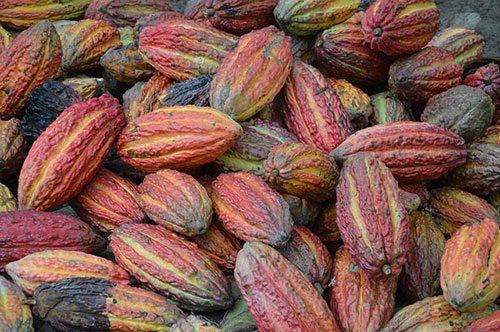
The cacao tree is native to the Amazon Basin. It was domesticated by the Olmecs (Mexico). More than 4,000 years ago, it was consumed by pre-hispanic cultures along the Yucatán, including the Maya, and as far back as Olmeca civilization in spiritual ceremonies. It also grows in the foothills of the Andes in the Amazon and Orinoco basins of South America, in Colombia and Venezuela. Wild cacao still grows there. Its range may have been larger in the past; evidence of its wild range may be obscured by cultivation of the tree in these areas since long before the Spanish arrived.
As of November 2018, evidence suggests that cacao was first domesticated in equatorial South America, before being domesticated in Central America roughly 1,500 years later. Artifacts found at Santa-Ana-La Florida, in Ecuador, indicate that the Mayo-Chinchipe people were cultivating cacao as long as 5,300 years ago. Chemical analysis of residue extracted from pottery excavated at an archaeological site at Puerto Escondido, in Honduras, indicates that cocoa products were first consumed there sometime between 1500 and 1400 BC. Evidence also indicates that, long before the flavor of the cacao seed (or bean) became popular, the sweet pulp of the chocolate fruit, used in making a fermented (5.34% alcohol) beverage, first drew attention to the plant in the Americas. The cocoa bean was a common currency throughout Mesoamerica before the Spanish conquest.
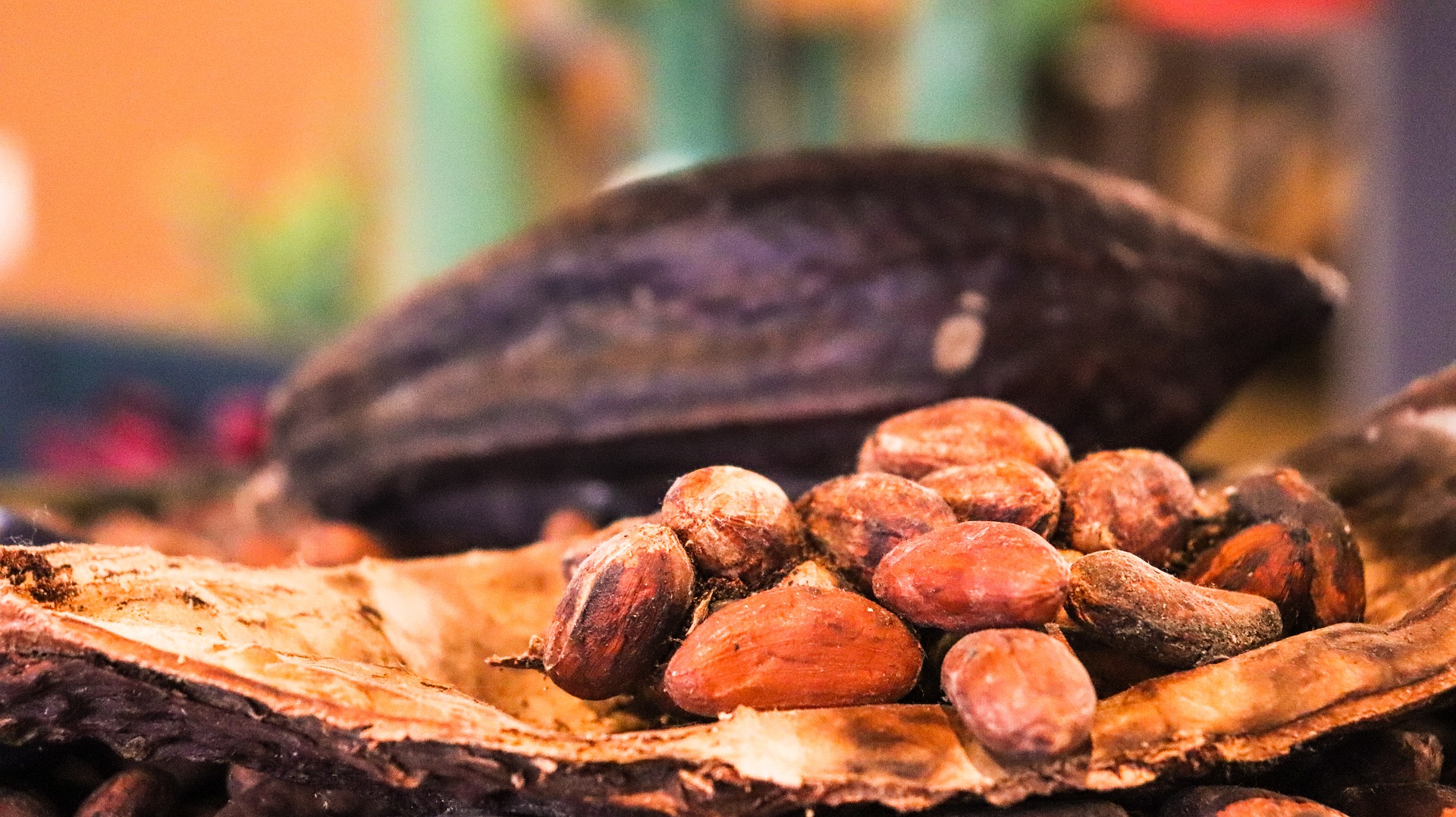
Cacao trees grow in a limited geographical zone, of about 20° to the north and south of the Equator. Nearly 70% of the world crop today is grown in West Africa. The cacao plant was first given its botanical name by Swedish natural scientist Carl Linnaeus in his original classification of the plant kingdom, where he called it Theobroma ("food of the gods") cacao. Cocoa was an important commodity in pre-Columbian Mesoamerica. A Spanish soldier who was part of the conquest of Mexico by Hernán Cortés tells that when Moctezuma II, emperor of the Aztecs, dined, he took no other beverage than chocolate, served in a golden goblet. Flavored with vanilla or other spices, his chocolate was whipped into a froth that dissolved in the mouth. No fewer than 60 portions each day reportedly may have been consumed by Moctezuma II, and 2,000 more by the nobles of his court. Chocolate was introduced to Europe by the Spaniards, and became a popular beverage by the mid-17th century. Spaniards also introduced the cacao tree into the West Indies and the Philippines. It was also introduced into the rest of Asia, South Asia and into West Africa by Europeans. In the Gold Coast, modern Ghana, cacao was introduced by a Ghanaian, Tetteh Quarshie.